While JWST was built to look back at the dawn of the universe, it is also proving to be an exceptional tool for studying our own planetary neighbours.
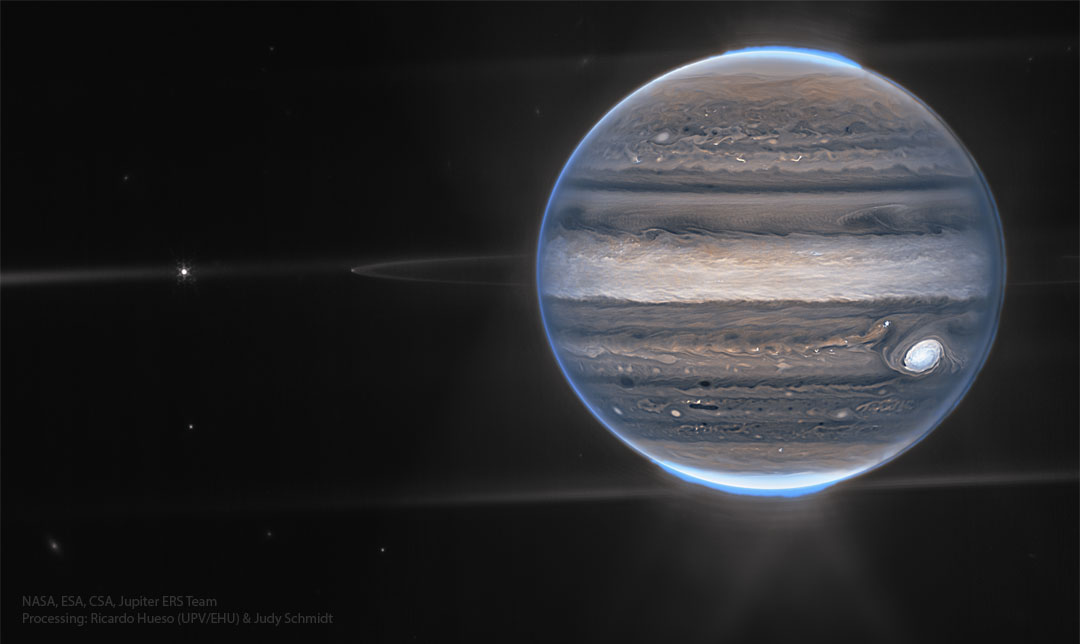
The team has just released new infrared images of Jupiter, and it looks almost unrecognisable.
Because Webb sees in infrared, the images highlight temperature and atmospheric chemistry rather than visible cloud colours. The Great Red Spot shines brightly as a high-altitude haze, but the most stunning features are the brilliant, glowing auroras capping both the northern and southern poles.
You can even clearly see Jupiter's incredibly faint dust rings and two of its tiny moons against the dark background. It is a completely fresh perspective on the gas giant.
Similar Posts


June 02, 2026
• 3 min read

February 03, 2012
• 1 min read