NASA's Lucy spacecraft took to the skies this week atop an Atlas V rocket, beginning an incredibly complex twelve-year journey to study the Jupiter Trojan asteroids.
These asteroid swarms share Jupiter's orbit, trapped in the gravitationally stable Lagrange points ahead of and behind the giant planet.
Scientists believe they are pristine remnants from the formation of the outer planets (Jupiter, Saturn, Uranus, and Neptune) - essentially the original building blocks of our solar system. The spacecraft will perform a series of intricate Earth gravity assists to visit a staggering eight different asteroids over its lifespan. It is orbital mechanics functioning at its absolute finest!
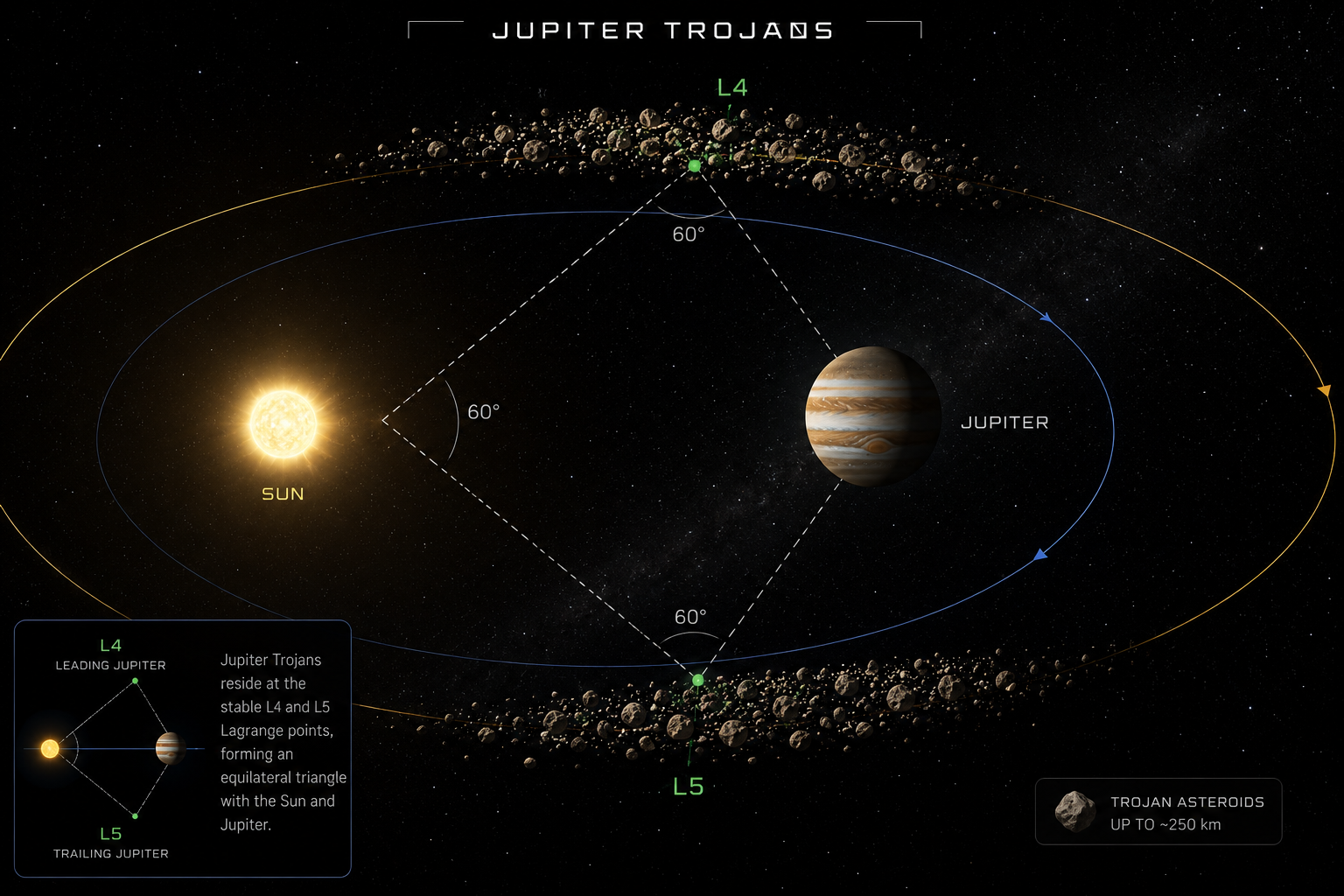
Lucy: The first mission to explore the Jupiter Trojan asteroids.
Similar Posts



September 22, 2026
• 8 min read