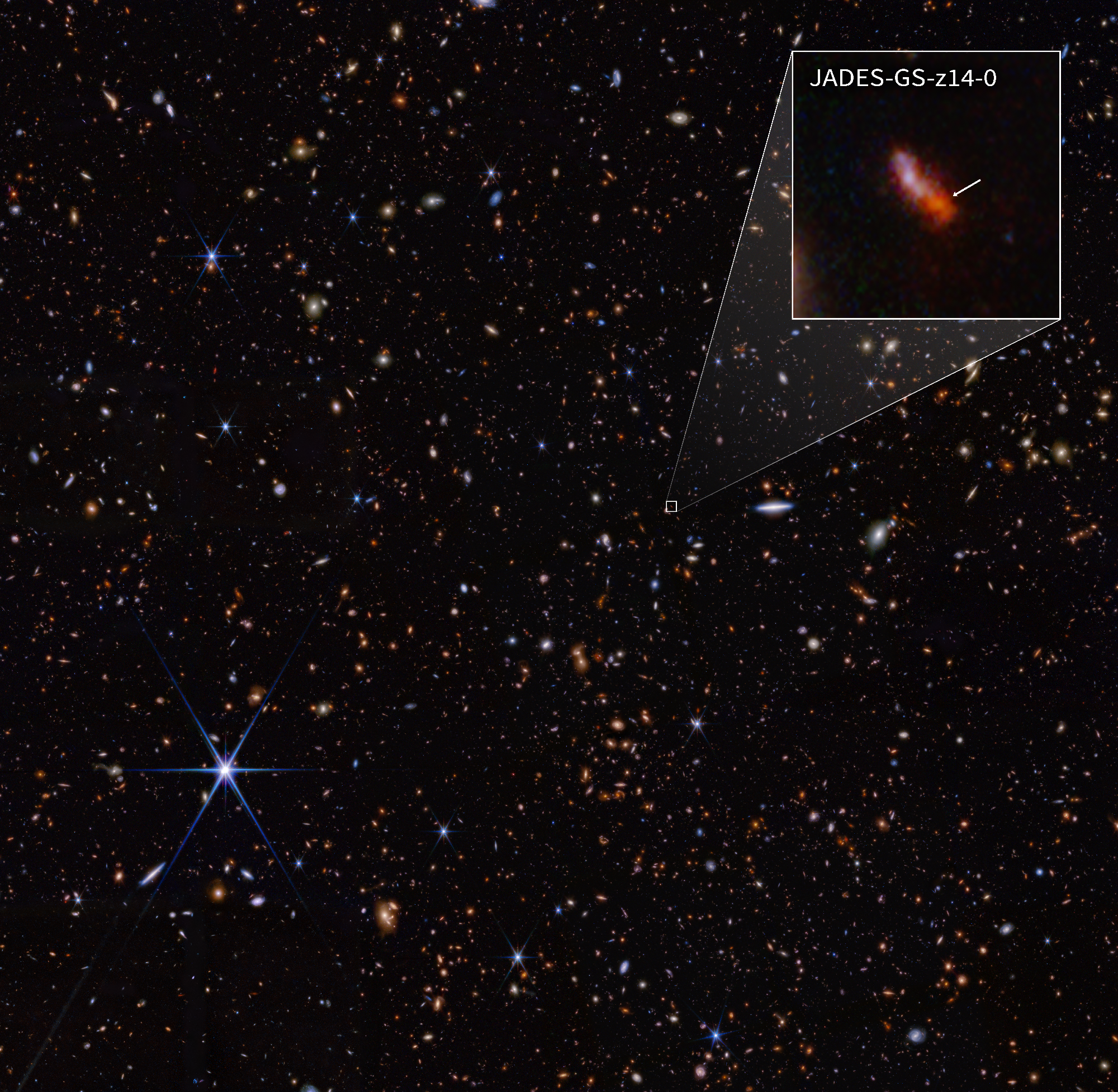
The James Webb Space Telescope continues to absolutely shatter our understanding of the early universe. Astronomers have just confirmed the discovery of JADES-GS-z14-0, the most distant and earliest galaxy ever observed.
We are seeing this galaxy as it existed a mere 290 million years after the Big Bang. What is truly baffling astrophysicists is that it is surprisingly massive and incredibly bright. According to our standard models of cosmology, a galaxy of that size simply shouldn't have had enough time to form that early in the universe's history. Webb isn't just finding new objects; it is forcing us to fundamentally rewrite the rulebook on how galaxies assemble.
As reported on the BBC
And as reported by NASA
Similar Posts



November 23, 2011
• 1 min read